

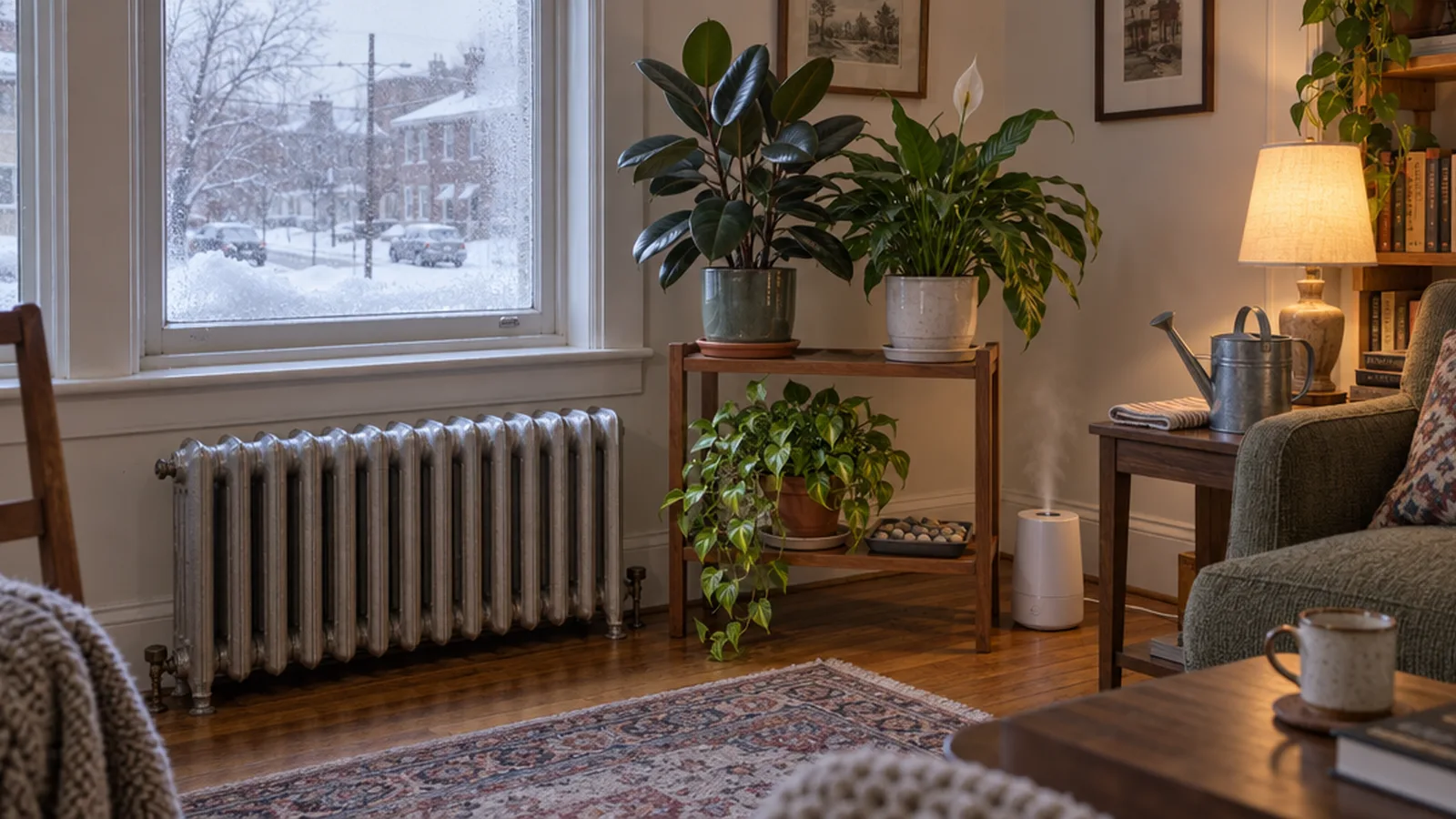
Plant Care is the everyday part of keeping houseplants: how much water, how much light, what to do when the heat comes on, and when a plant actually needs a bigger pot. The guides here assume a real US home, with windows that face the wrong way, radiators or forced air in winter, and a schedule that does not revolve around a watering can. This category also holds care profiles for the plant groups people grow most, from pothos and monsteras to hoyas, orchids and holiday cacti.
How this category is organized
The guides are grouped into sub-topics, and each sub-topic collects related articles as they are published. Some sub-topics are routines that apply to almost every plant, and others focus on a single plant family or species. If you are not sure where to start, the routine sub-topics usually explain the problem you are seeing.
Core care routines
Watering
Watering covers how to tell when a plant is actually dry, how often common species need water, bottom watering, wick watering and keeping plants going while you travel. Most indoor plant losses trace back to watering habits, so this is the first place to look when something seems wrong.
Light
Light explains what bright indirect, medium and low light mean in an actual room, how quickly light fades as you move away from a window, and when a grow light makes sense. It also covers the signs of a plant stretching for light, such as long bare gaps between leaves.
Fertilizing
Fertilizing covers what the numbers on a label mean, how often to feed common houseplants, and why less is usually safer than more. It also takes an honest look at homemade fertilizer ideas and which ones are worth the trouble.
Winter Care
Winter Care deals with the season that tests indoor plants hardest: short days, cold drafts near the glass and dry heated air. It covers how watering changes in winter, how cold is too cold, and how to bring outdoor plants inside without bringing pests along. Plants should never sit on or directly over a radiator or space heater, where leaves scorch and soil bakes dry.
Repotting
Repotting covers when a plant truly needs a new pot, how to choose a size, how to handle the roots, and which potting mixes suit aroids, succulents, orchids and African violets. It also gives an honest answer about decorative pots with no drainage hole. Wear a mask if potting mix or perlite dust bothers your lungs, and work somewhere easy to sweep.
Pruning Houseplants
Pruning Houseplants explains where to cut, what to remove and how to shape trailing vines, tree-form plants and flowering plants without setting them back. Some plants, including rubber plants and fiddle leaf figs, have sap that can irritate skin and eyes, so gloves are a good habit.
Pest Prevention
Pest Prevention is about keeping spider mites, mealybugs, thrips and other common pests from settling in to begin with. It focuses on inspection, quarantine and growing conditions. Any treatment mentioned should be used exactly as the label directs and kept away from pets, children and food.
Plant families and species
Aroids
Aroids include pothos, philodendrons, monsteras, alocasias, anthuriums, peace lilies, ZZ plants and elephant ears. They are the backbone of many indoor collections, and nearly all of them are toxic to pets if chewed.
Succulents & Cacti
Succulents & Cacti covers jade, aloe, the trailing string plants and indoor cacti. The focus is on the light and watering mistakes that kill them indoors, especially in winter.
Indoor Trees
Indoor Trees covers fiddle leaf figs, rubber plants, money trees, bird of paradise and indoor palms. It includes practical matters such as keeping tall plants from tipping over.
Prayer Plants & Calatheas
Prayer Plants & Calatheas covers plants known for leaves that fold at night and edges that crisp in dry air. It explains how to give them the steady moisture and humidity they prefer.
Peperomia
Peperomia covers a large, forgiving group of compact plants, from the baby rubber plant to watermelon peperomia, with notes on light, soil and humidity.
Hoya
Hoya covers waxy-leaved climbers and trailers, including popular varieties and the conditions that encourage them to bloom.
Air Plants
Air Plants explains how to water and light Tillandsia and how long to expect them to live, including ones glued into a display.
Tradescantia
Tradescantia covers fast-growing trailing plants with purple, striped or pink foliage and how to keep them full instead of stringy.
Pilea
Pilea covers the Chinese money plant and its relatives, including how they grow and how they handle water.
Spider Plant
Spider Plant covers one of the most adaptable houseplants, including summers outdoors and other ways people grow it.
Ferns
Ferns covers Boston, button and lemon button ferns and others that need more consistent moisture than most houseplants.
Flowering and reblooming plants
Flowering Plants
Flowering Plants covers poinsettias, Christmas and Thanksgiving cacti, African violets, peace lilies and other plants grown for their blooms. It explains what triggers flowering indoors and how to keep a holiday plant going after the season ends.
Orchids
Orchids covers the moth orchids most people bring home, from watering and potting media to what to do after the flowers drop. It also explains how to encourage an orchid to bloom again indoors.
Related categories
If you are still deciding what to grow, start with Choosing Plants. To turn a healthy plant into more plants, see Propagation. For ways to display plants without compromising their care, see Plant Decor.