

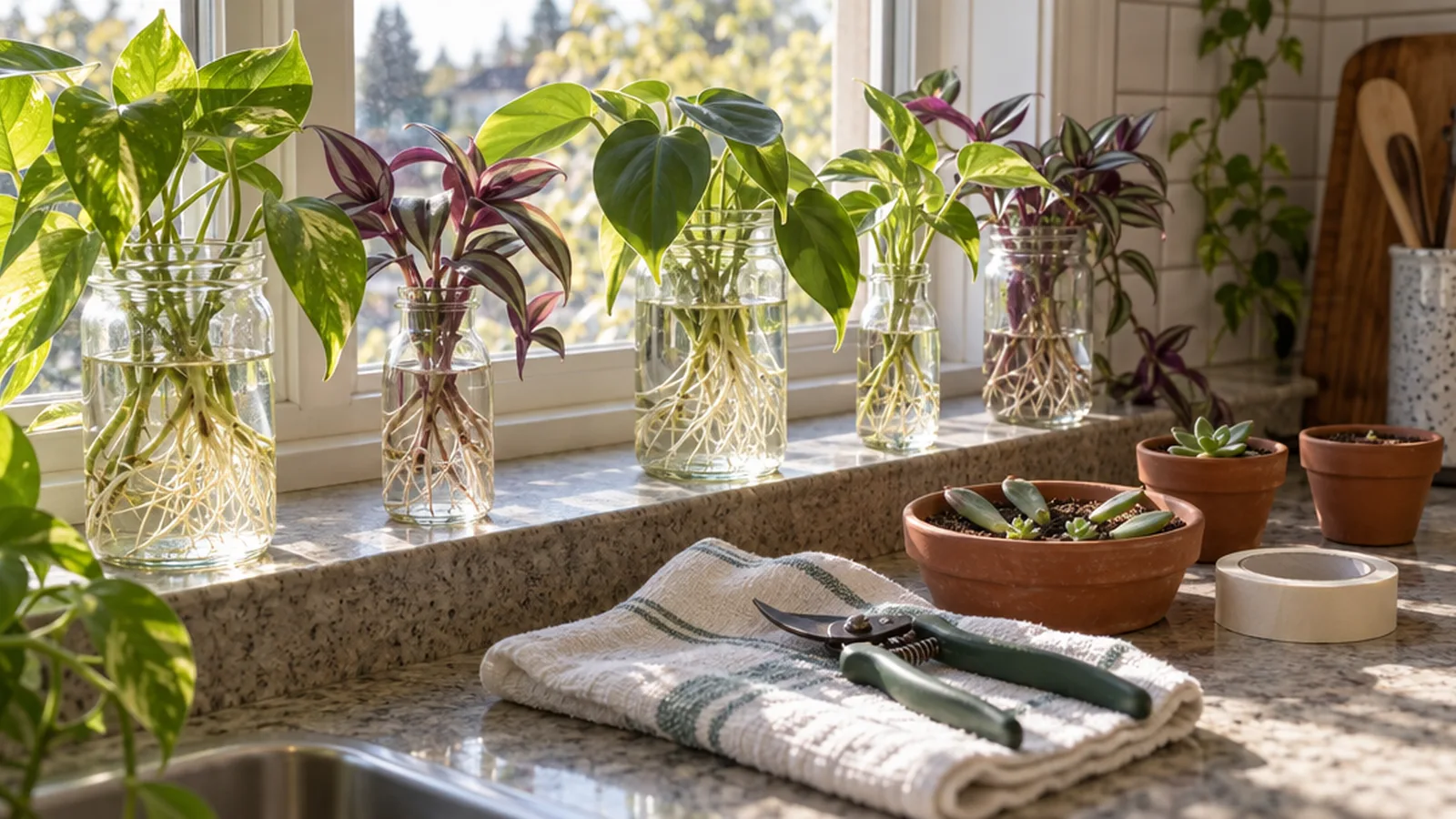
Propagation is the cheapest way to get more plants and the most satisfying way to rescue a leggy one. Most common houseplants can be propagated at home with clean snips, a jar of water or a small pot of mix, and some patience. This category explains the methods, the timelines and what to do when roots refuse to show up.
The basic methods
Cuttings
Stem and node cuttings work for vining plants such as pothos, philodendron and tradescantia. Leaf cuttings work for many succulents, peperomias and African violets.
Water and soil rooting
Rooting in water lets you watch progress, while rooting in soil skips the transition to a pot later. Both work, and the better choice depends on the plant and your habits.
Division and offsets
Division splits a crowded plant into smaller ones, and offsets or pups are baby plants that a parent produces on its own.
Air layering
Air layering roots a branch while it is still attached to the parent plant. It suits larger plants such as monsteras, philodendrons and rubber plants.
Main sub-topics
Stem & Leaf Cuttings
Stem & Leaf Cuttings covers the general technique, from where to cut to how to handle leaf petiole cuttings. It includes guides for plants such as string of hearts, tradescantia, peperomia, polka dot plant and Hindu rope plant.
Water Propagation
Water Propagation covers growing roots, and even whole plants, in water. It explains which plants handle it best, whether rooting hormone helps, and the mistakes that lead to rot.
Pothos
Pothos covers the most forgiving plant to start with, including rooting in soil, why a leaf without a node will not grow into a new plant, and potting up rooted cuttings.
Aroids
Aroids covers propagating philodendrons, alocasias, anthuriums and Chinese evergreens by cuttings, division, corms and air layering.
Monstera
Monstera covers taking node cuttings, using aerial roots, rooting in soil and air layering a large plant.
Succulents
Succulents covers jade, aloe, string of pearls, Christmas cactus and other succulents, including when to let cuttings callus before planting.
Snake Plant
Snake Plant covers leaf cuttings, division and what to do with a leaf that has no roots.
Spider Plant
Spider Plant covers rooting the plantlets that spider plants produce on their own.
Chinese Money Plant
Chinese Money Plant covers separating pilea pups, along with propagating the similar coin-leaf peperomia.
African Violets
African Violets covers leaf propagation in water and soil and dividing crowded crowns.
Propagate Rubber Plant
Propagate Rubber Plant covers stem cuttings and air layering for Ficus elastica, including how to handle its milky sap.
Timelines and patience
Rooting times vary widely with the plant, the season and the warmth of the room. A pothos cutting may root in a couple of weeks in summer, while a snake plant leaf can take months. Cuttings started in a cool winter room are usually slower, which is normal rather than a sign of failure.
A few safety notes
Use clean, sharp tools and wash your hands after handling cuttings. The sap of many aroids, figs and euphorbias can irritate skin and eyes, so gloves help. Keep jars of cuttings out of reach of pets and children, since many popular propagation plants are toxic if chewed.
Related categories
For ongoing care once your new plant is established, see Plant Care. For ideas on displaying jars of cuttings and young plants, see Plant Decor.